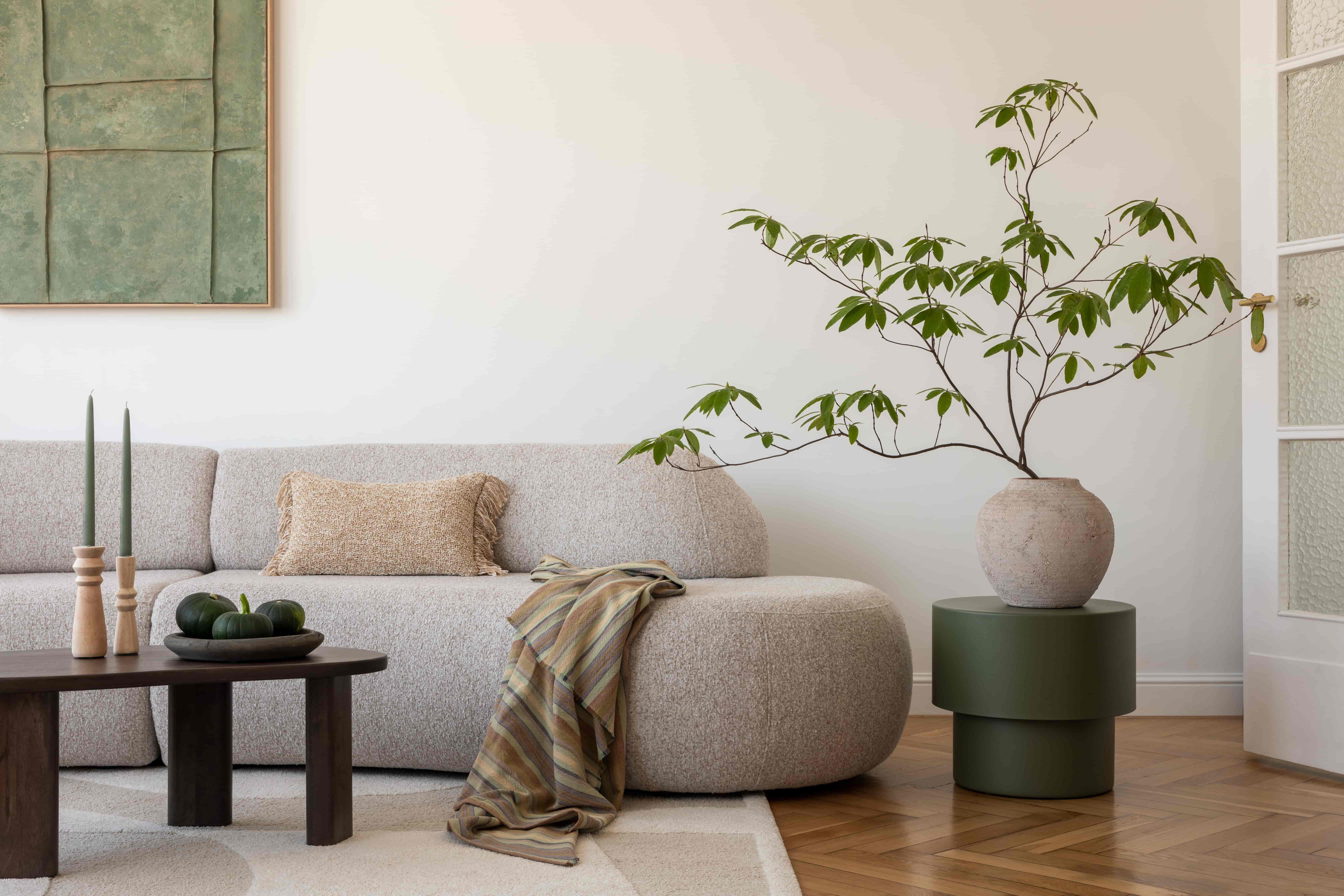
Walk into a model home from 2018, and you will see it: The Gray Box. Gray floors, gray walls, gray sofas, and maybe a pop of white marble. It was clean, it was crisp, and, to a certain extent, it was cold. Fast forward to 2026, and the "Millennial Gray" era is officially dead. In its place, a new aesthetic has taken over the American home, one that blends the clean lines of modernism with the cozy, tactile comfort of a sanctuary. It is called "Warm Minimalism."
It is not clutter (Maximalism), and it is not sterile (Industrial). It is the happy medium that says, "Yes, this home is stylish, but you can also nap on the couch." Here is why this trend is dominating in this year and how you can bring it into your space without a full renovation.
At its core, Warm Minimalism is about "Reduction with Soul." Traditional minimalism (think: early 2000s Apple Store) focused on removing everything until the space felt perfect and untouched. Warm minimalism removes clutter but adds texture. It prioritizes:
Fewer items, but better quality.
Natural materials over synthetic ones.
Curves and softness over sharp edges.
If gray is out, what is in? The 2026 palette is pulled directly from the earth.
Universal Khaki: This isn't your dad's cargo pants. It’s a sophisticated, muddy beige that changes with the light. It feels grounding.
Terracotta & Rust: Used as accents in throw pillows or ceramics, these add a "sun-baked" warmth that gray never could.
Cream & Oatmeal: Pure white walls are being replaced by creamy, yellow-based whites that reflect light softly rather than harshly.
Sage & Olive Green: The only "color" allowed in this palette, used to bring the outdoors in (Biophilic Design).
In a room without bright colors, texture does the heavy lifting. In a Warm Minimalist living room, you might see:
Bouclé and Linen: Sofas are upholstered in nubby, imperfect fabrics that beg to be touched.
Raw Wood: Instead of glossy, lacquered furniture, we are seeing raw Oak, Walnut, and Teak with visible grain and knots.
Limewash Walls: Paint is getting textured too. Limewash adds a cloudy, suede-like finish to walls, giving them depth and history instantly.
Furniture in 2026 is softening up. The sharp, rectangular coffee table is being replaced by organic, kidney-bean shapes or round nesting tables.
Why? Curves are psychologically more relaxing than sharp corners. They mimic nature. A curved sofa encourages conversation and flow, breaking the rigidity of a square room.
You don't need to burn your house down to achieve Warm Minimalism.
Change the Bulbs: The easiest fix. Swap your cool-white (4000K) LEDs for warm-white (2700K). Instant coziness.
Add "Living" Decor: A large olive tree or a clay vase with dried branches adds sculptural height and organic chaos to a rigid room.
Layer Rugs: Place a smaller, vintage wool rug over a large, natural jute rug. This adds instant warmth to the floor.
Edit Ruthlessly: Warm minimalism is still minimalism. Clear the surfaces. If an object doesn't have a function or a sentimental value, it goes in the drawer.
The shift to Warm Minimalism in 2026 is a reaction to a high-tech, high-stress world. We don't want our homes to look like showrooms anymore; we want them to feel like hugs. By trading the gray paint for warm oatmeal and swapping chrome for wood, you create a space that isn't just beautiful to look at, but it’s beautiful to live in.
How to Choose the Right Moving Company for a Stress-Free Move Moving is consistently...
Read More
Understanding Business Insurance: What Small Businesses Need Insurance is one of those...
Read More
Pricing Strategies for Service-Based Businesses Pricing is one of the most...
Read More
Understanding Customer Service Channels: Chat, Phone, and Email Support When something...
Read More